

Tips to help children cope
1) Follow regular family routines. Children are reassured that their lives are stable and secure when daily life is predictable and consistent.
For younger children, keeping routines for mealtimes, bath time, and bedtime the same from day to day is important.
For older children, try to enable them to continue with their usual activities. Let them know what each day holds by using calendars.
2) Children are reassured when parents enforce consistent limits. Parents often relax rules and limits because they feel bad/guilty/want to indulge/don’t want to be remembered as a nag.
If rules are relaxed - children perceive this as a reminder that all is not normal and feel less secure.
3) Keep family time firmly off-limits from visits, phone calls, and other interruptions. (Also prevent children from overhearing unnecessary details.)
4) Create new family rituals, e.g. pizza & film Fridays. Children to have these new routines to count on and look forward to.
5) Encourage children to talk about their worries and feelings. Don’t force them but give them space and permission to have any emotion.
click on the resources below to print off for your patients

What can change in a family

Helping children to talk about feelings

Managing a family’s time & expectations

A way for children to write down their worries

Keeping a family connected through music

Giving permission for quiet alone time
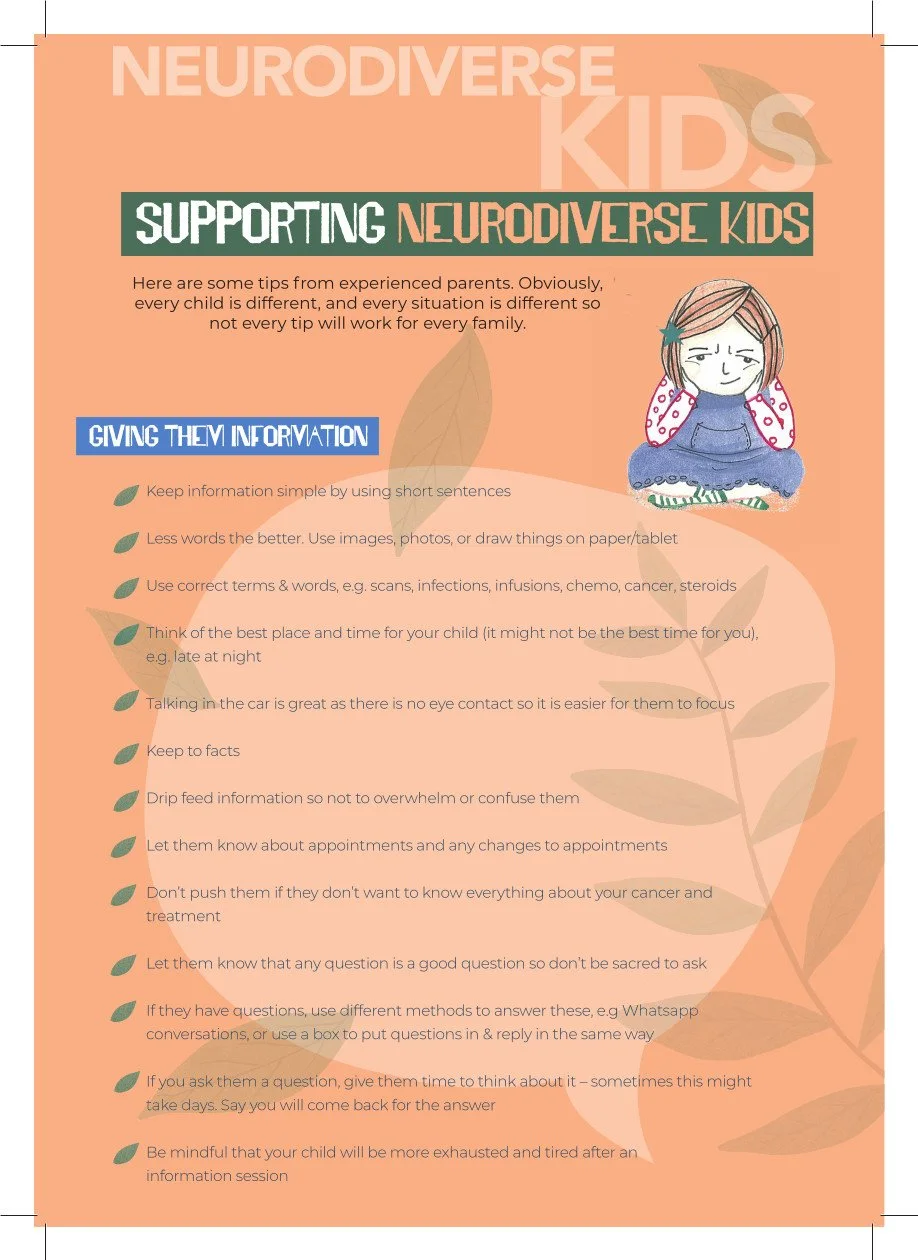
Supporting neurodivergent kids

Understanding what needs to change

Fun game for kids with little parental energy